Nature Genetics study: AI tool MANTIS predicts childhood brain tumour survival from DNA methylation
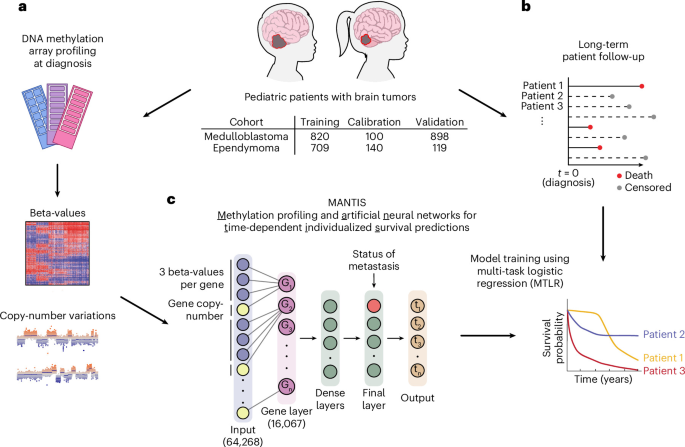
Built on methylation data from 2,786 patients with medulloblastoma and ependymoma, it reaches concordance of up to 0.80 and flags about 60% of average-risk medulloblastoma patients who may not lose survival with lower radiation doses; the treatment finding is not yet tested in a trial.
Why it matters
Doctors treating medulloblastoma and ependymoma must weigh the risk of recurrence against lasting damage from craniospinal radiation, and current clinical indicators predict outcomes less accurately than MANTIS did in this study. The model gives individual survival probabilities over 10 years rather than placing children in broad risk groups. Its suggestion that many average-risk patients could receive less intensive radiation without a significant survival disadvantage (P = 0.683) is retrospective, so watch for prospective trials before any change in care.
Key facts
- Methylation data from 2,786 patients
- Concordance indices up to 0.80 ± 0.07
- Individual survival probabilities over 10 years
- ~60% of average-risk medulloblastoma patients flagged for lower radiation
- Published in Nature Genetics on 3 November 2026